


Page 71 - eBook_Proceedings of the International Conference on Digital Manufacturing V2
P. 71
Fabrication and Characterization of a Low-Cost Piezoelectric using Rochelle
                         Salt for Energy Harvesting and Sensor Applications

               Complementing these metrics, qualitative results (Figure  27)
               showcase visual segmentation outputs  that demonstrate the
               model’s ability to accurately delineate and classify cervical cell
               regions within Pap smear images.
               Together, these results affirm the model’s potential for reliable
               classification of normal,  precancerous, and cancerous cells,
               contributing  meaningfully to cervical cancer screening
               applications.

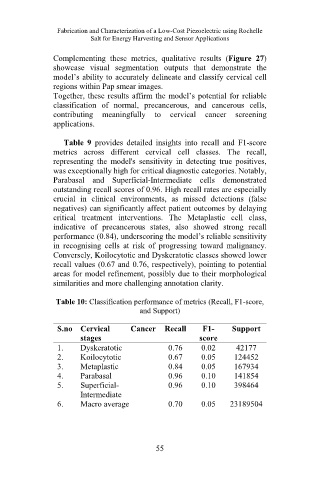
                  Table  9  provides detailed insights into recall and F1-score
               metrics  across  different cervical  cell classes.  The recall,
               representing the model's sensitivity in detecting true positives,
               was exceptionally high for critical diagnostic categories. Notably,
               Parabasal and Superficial-Intermediate cells  demonstrated
               outstanding recall scores of 0.96. High recall rates are especially
               crucial  in  clinical environments, as missed detections (false
               negatives) can significantly affect patient outcomes by delaying
               critical treatment interventions.  The Metaplastic  cell class,
               indicative of precancerous states, also showed strong recall
               performance (0.84), underscoring the model’s reliable sensitivity
               in recognising cells at risk of progressing toward malignancy.
               Conversely, Koilocytotic and Dyskeratotic classes showed lower
               recall values (0.67 and 0.76, respectively), pointing to potential
               areas for model refinement, possibly due to their morphological
               similarities and more challenging annotation clarity.

                Table 10: Classification performance of metrics (Recall, F1-score,
                                       and Support)

                S.no  Cervical      Cancer   Recall     F1-     Support
                       stages                          score
                1.     Dyskeratotic           0.76     0.02      42177
                2.     Koilocytotic           0.67     0.05     124452
                3.     Metaplastic            0.84     0.05     167934
                4.     Parabasal              0.96     0.10     141854
                5.     Superficial-           0.96     0.10     398464
                       Intermediate
                6.     Macro average          0.70     0.05    23189504


                                              55

