


Page 85 - eBook_Proceedings of the International Conference on Digital Manufacturing V2
P. 85
Fabrication and Characterization of a Low-Cost Piezoelectric using Rochelle
                         Salt for Energy Harvesting and Sensor Applications


                  Schalek and   MIT researchers   Development of   Continuous
                  Szegvari      Spencer and   rheo and thixo   rheoconversion
                  demonstrate   Flemings conduct   processing   methods
                  thixotropic 颐浓  pivotal     techniques for   enhance slurry
                  翾 in non-     experiments with   non-dendritic   production
                  metallic systems  Sn-Pb alloys  slurries   efficiency
                   192           197           1990s        P res en t
                    3             1


                          192          1980           2000s
                           7              s

                         Peterfi       First         Introduction of
                         introduces the   commercial   thixomolding
                         term          applications of   for magnesium
                         "thixotropy"  semi-solid    alloys
                                       processing
                                       begin


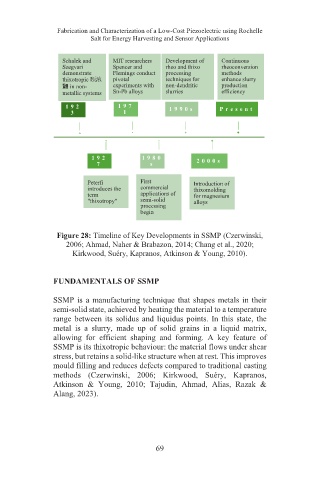
                Figure 28: Timeline of Key Developments in SSMP (Czerwinski,
                   2006; Ahmad, Naher & Brabazon, 2014; Chang et al., 2020;
                     Kirkwood, Suéry, Kapranos, Atkinson & Young, 2010).


               FUNDAMENTALS OF SSMP

               SSMP is a manufacturing technique that shapes metals in their
               semi-solid state, achieved by heating the material to a temperature
               range between its solidus and liquidus points. In this state, the
               metal  is  a  slurry,  made  up  of  solid  grains  in  a  liquid  matrix,
               allowing for efficient shaping and  forming. A key feature of
               SSMP is its thixotropic behaviour: the material flows under shear
               stress, but retains a solid-like structure when at rest. This improves
               mould filling and reduces defects compared to traditional casting
               methods  (Czerwinski, 2006;  Kirkwood, Suéry, Kapranos,
               Atkinson  & Young, 2010;  Tajudin, Ahmad, Alias, Razak  &
               Alang, 2023).


                                              69

