


Page 13 - eBook_Proceedings of the International Conference on Digital Manufacturing V2
P. 13
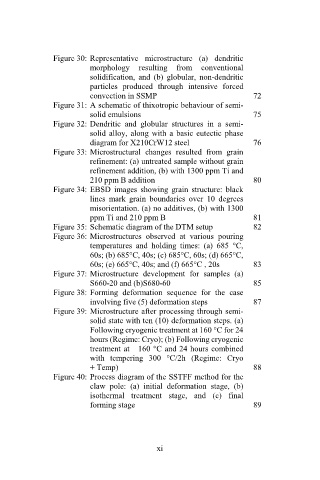
Figure 30: Representative  microstructure  (a)  dendritic
                         morphology resulting  from conventional
                         solidification, and (b)  globular, non-dendritic
                         particles produced through intensive forced
                         convection in SSMP                          72
               Figure 31: A schematic of thixotropic behaviour of semi-
                         solid emulsions                             75
               Figure 32: Dendritic  and  globular structures in a  semi-
                         solid alloy, along with a basic eutectic phase
                         diagram for X210CrW12 steel                 76
               Figure 33: Microstructural changes  resulted from grain
                         refinement: (a) untreated sample without grain
                         refinement addition, (b) with 1300 ppm Ti and
                         210 ppm B addition                          80
               Figure 34: EBSD images showing grain  structure: black
                         lines mark grain boundaries over 10 degrees
                         misorientation. (a) no additives, (b) with 1300
                         ppm Ti and 210 ppm B                        81
               Figure 35: Schematic diagram of the DTM setup         82
               Figure 36: Microstructures observed at various pouring
                         temperatures and holding  times:  (a)  685  °C,
                         60s; (b) 685°C, 40s; (c) 685°C, 60s; (d) 665°C,
                         60s; (e) 665°C, 40s; and (f) 665°C , 20s    83
               Figure 37: Microstructure development for  samples  (a)
                         S660-20 and (b)S680-60                      85
               Figure 38: Forming  deformation  sequence  for  the  case
                         involving five (5) deformation steps        87
               Figure 39: Microstructure after processing through semi-
                         solid state with ten (10) deformation steps. (a)
                         Following cryogenic treatment at 160 °C for 24
                         hours (Regime: Cryo); (b) Following cryogenic
                         treatment at   160 °C and 24 hours combined
                         with  tempering 300 °C/2h  (Regime: Cryo
                         + Temp)                                     88
               Figure 40: Process diagram of the SSTFF method for the
                         claw  pole:  (a) initial  deformation stage, (b)
                         isothermal treatment stage,  and  (c) final
                         forming stage                               89


                                              xi

