


Page 19 - eBook_Proceedings of the International Conference on Digital Manufacturing V2
P. 19
Collaborative Study on Weight Optimisation of Lubricant Bottles under
                  Stacking Condition using Finite Element Analysis and Machine Learning

                  Moreover, the bottles at the lowest layer are often collapsed
               when subjected to  the external top  load being applied during
               stacking  condition (Suvanjumrat  &  Chaichanasiri,  2014).
               Therefore, to avoid collapsing and increase their recyclability, a
               comprehensive solution is needed to improve the bottles’ design
               while  confirming  that  the  original strength and stiffness is not
               compromised.


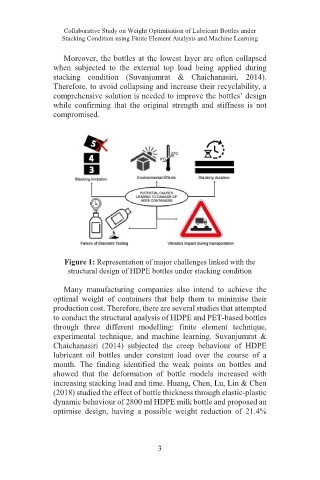
                  Figure 1: Representation of major challenges linked with the
                   structural design of HDPE bottles under stacking condition

                  Many manufacturing companies also  intend to achieve the
               optimal weight of containers  that help  them to  minimise  their
               production cost. Therefore, there are several studies that attempted
               to conduct the structural analysis of HDPE and PET-based bottles
               through three different  modelling: finite element technique,
               experimental technique,  and  machine learning.  Suvanjumrat  &
               Chaichanasiri  (2014) subjected  the creep  behaviour  of HDPE
               lubricant oil  bottles under constant load over the course  of  a
               month. The  finding identified the weak points on  bottles and
               showed  that the deformation of bottle models increased with
               increasing stacking load and time. Huang, Chen, Lu, Lin & Chen
               (2018) studied the effect of bottle thickness through elastic-plastic
               dynamic behaviour of 2800 ml HDPE milk bottle and proposed an
               optimise  design,  having a possible weight reduction of 21.4%


                                              3

