


Page 58 - eBook_Proceedings of the International Conference on Digital Manufacturing V1
P. 58
Proceedings of the International Conference on Digital Manufacturing –
                                         Volume 1

               mechanisms,  should be considered. These modifications could
               help maintain thermal stability throughout extended printing
               tasks, thereby improving part quality and reducing the incidence
               of thermally induced print defects

               Blockboard Sheet Enclosure

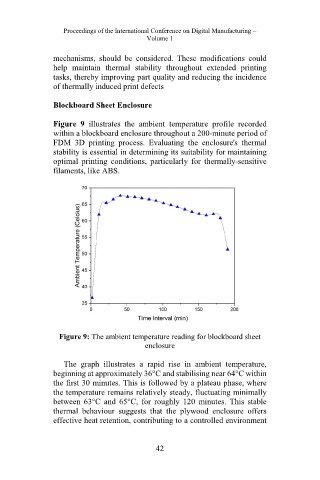
               Figure  9  illustrates  the ambient temperature profile recorded
               within a blockboard enclosure throughout a 200-minute period of
               FDM  3D printing process. Evaluating the enclosure's thermal
               stability is essential in determining its suitability for maintaining
               optimal printing conditions, particularly for  thermally-sensitive
               filaments, like ABS.


                 Figure 9: The ambient temperature reading for blockboard sheet
                                        enclosure

                  The graph illustrates a rapid rise  in ambient  temperature,
               beginning at approximately 36°C and stabilising near 64°C within
               the first 30 minutes. This is followed by a plateau phase, where
               the temperature remains relatively steady, fluctuating minimally
               between 63°C and 65°C, for roughly 120 minutes.  This stable
               thermal  behaviour  suggests that  the plywood enclosure offers
               effective heat retention, contributing to a controlled environment


                                              42

