


Page 72 - eBook_Proceedings of the International Conference on Digital Manufacturing V1
P. 72
Proceedings of the International Conference on Digital Manufacturing –
                                         Volume 1

                                          Literature
                                           Review

                                Result             Problem Analysis
                               Analysis             and Hypothesis


                                                          Data
                          Implementation                Collection


                                     Model        Model
                                   Development   Selection

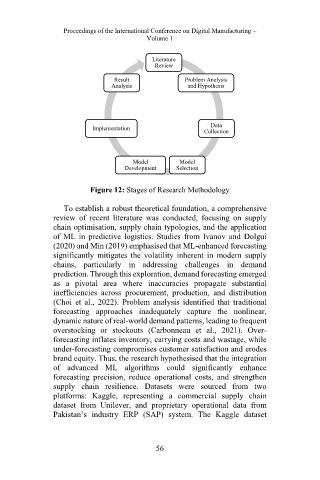
                         Figure 12: Stages of Research Methodology

                  To establish a robust theoretical foundation, a comprehensive
               review of recent  literature was conducted, focusing on supply
               chain optimisation, supply chain typologies, and the application
               of ML in predictive logistics. Studies  from  Ivanov and Dolgui
               (2020) and Min (2019) emphasised that ML-enhanced forecasting
               significantly  mitigates the  volatility inherent in modern supply
               chains, particularly  in  addressing challenges  in demand
               prediction. Through this exploration, demand forecasting emerged
               as a pivotal  area where inaccuracies propagate  substantial
               inefficiencies across procurement, production, and distribution
               (Choi et al., 2022). Problem analysis identified that  traditional
               forecasting approaches inadequately capture the nonlinear,
               dynamic nature of real-world demand patterns, leading to frequent
               overstocking  or stockouts (Carbonneau  et al.,  2021). Over-
               forecasting inflates inventory, carrying costs and wastage, while
               under-forecasting compromises customer satisfaction and erodes
               brand equity. Thus, the research hypothesised that the integration
               of advanced ML algorithms could significantly enhance
               forecasting precision,  reduce operational costs,  and  strengthen
               supply chain resilience. Datasets were sourced from two
               platforms: Kaggle, representing a commercial  supply chain
               dataset from Unilever, and proprietary operational  data from
               Pakistan’s  industry ERP (SAP) system. The  Kaggle dataset


                                              56

